

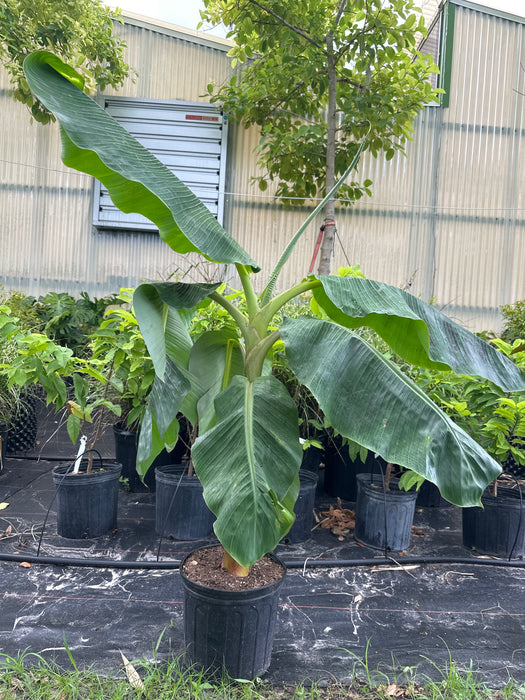
Plantain-Puerto Rican
Sold out
Original price
$39.00
-
Original price
$39.00
Original price
$39.00
$39.00
-
$39.00
Current price
$39.00
The Puerto Rican Plantain Banana Tree, known for its sweet, soft fruit, is a tropical plant that thrives in warm climates and offers a unique addition to gardens or indoor spaces. Below is a detailed overview of its characteristics, care requirements, and planting guidelines.Taste
The Puerto Rican Plantain Banana is celebrated for its distinct flavor, which is softer and sweeter than other plantain varieties, which are often hard and bitter. This makes it a favorite for culinary uses worldwide, particularly in exotic desserts and recipes. The fruit’s sweetness and favorable texture set it apart from common grocery store plantains, offering a rich, tropical taste that enhances dishes. Its unique flavor profile makes it ideal for cooking, baking, or enjoying fresh, providing a versatile ingredient for home cooks.Best Growing Environment
This plant thrives in warm, humid, tropical climates, ideally in USDA Zones 9–11, with some areas of Puerto Rico reaching Zones 12–13. It prefers rich, well-draining soil amended with organic matter like compost or peat moss to ensure proper drainage and nutrient availability. The Puerto Rican Plantain Banana Tree can grow outdoors in southern Florida, southern Texas, southern California, or Puerto Rico’s coastal and lowland regions, where temperatures rarely drop below 30F. In cooler climates, it is best grown in large containers (at least 15 gallons) to allow indoor overwintering. Protection from strong winds is crucial, as the large leaves are susceptible to tearing, and a sheltered location helps maintain plant health.Common Names
The Puerto Rican Plantain Banana Tree is commonly referred to as:
This dwarf variety typically reaches an average height of 8 feet, with a spread of about 6 feet. Its compact size makes it suitable for smaller spaces, including container gardening, compared to larger banana varieties that can grow 12–20 feet or more. The sturdy, thick trunk enhances its wind resistance, making it a practical choice for tropical or subtropical gardens.Growth Rate
The Puerto Rican Plantain Banana Tree has a moderate to fast growth rate in optimal conditions, producing fruit in approximately 15–18 months after planting. It takes about a year for the plant to flower, followed by an additional six months for the fruit to mature into a harvestable form. After fruiting, the main stem dies back, but new shoots (suckers) emerge from the rhizomes, continuing the plant’s lifecycle. Regular care, including consistent watering and fertilizing, accelerates growth.Sun Requirements
This plant requires full sun, meaning at least 6 hours of direct sunlight daily, to thrive and produce fruit. In warmer climates, it can tolerate some afternoon shade to prevent leaf scorching, especially during intense summer heat. When grown indoors in containers, place it near a bright, sunny window to mimic its natural light needs. Insufficient light can slow growth and reduce fruit production, so a south-facing location is ideal.Cold Hardiness
The Puerto Rican Plantain Banana Tree is hardy to USDA Zones 9–11, withstanding minimum temperatures of 30–40F. In Puerto Rico, it thrives in Zones 10–13, particularly in coastal areas where winter lows rarely dip below 40–50F. The rhizomes can survive underground down to 22F, but the above-ground plant will die back in freezing conditions. In cooler zones (8 or below), bring potted plants indoors when nighttime temperatures drop below 45F to prevent stress. For outdoor plants, cover with a blanket and use a light bulb or string lights for warmth during cold snaps.Water Requirements
Puerto Rican Plantain Banana Trees prefer consistently moist but not soggy soil. Water when the top 1–3 inches of soil are dry, ensuring thorough soaking until water drains through container holes or saturates the ground. In-ground plants need regular watering during establishment and during hot, dry periods, while established plants are more drought-tolerant but still require monitoring. For potted plants, ensure excess water drains to prevent root rot, and never let the roots sit in standing water. In Puerto Rico’s humid climate, natural rainfall often suffices, but supplemental watering is needed during dry spells.Planting Guide
To plant a Puerto Rican Plantain Banana Tree:
Fertilize monthly during the growing season (spring through summer) to support the plant’s heavy nutrient needs. Use a balanced, slow-release fertilizer with an 8-10-8 NPK ratio, applying 1–2 pounds for mature trees in a 4–8-foot radius around the base, lightly worked into the soil. For potted plants, dilute the fertilizer to half-strength to avoid root burn. In Puerto Rico’s year-round growing season, continue monthly applications unless growth slows in cooler months (e.g., December–February in higher elevations). Avoid fertilizing during dormancy or cold weather to prevent stress.USDA Zone
The Puerto Rican Plantain Banana Tree is best suited for USDA Zones 9–11, with optimal growth in Zones 10–13 in Puerto Rico’s coastal lowlands and southern regions, where minimum temperatures range from 30–50F or higher. In Puerto Rico, Zones 11b–13b are prevalent, especially in areas like San Juan’s coastal regions, where the mean minimum is around 67F (Zone 13b). In cooler zones (e.g., Zone 8), container growing with indoor overwintering is necessary to protect the plant from frost.Additional Notes
The Puerto Rican Plantain Banana is celebrated for its distinct flavor, which is softer and sweeter than other plantain varieties, which are often hard and bitter. This makes it a favorite for culinary uses worldwide, particularly in exotic desserts and recipes. The fruit’s sweetness and favorable texture set it apart from common grocery store plantains, offering a rich, tropical taste that enhances dishes. Its unique flavor profile makes it ideal for cooking, baking, or enjoying fresh, providing a versatile ingredient for home cooks.Best Growing Environment
This plant thrives in warm, humid, tropical climates, ideally in USDA Zones 9–11, with some areas of Puerto Rico reaching Zones 12–13. It prefers rich, well-draining soil amended with organic matter like compost or peat moss to ensure proper drainage and nutrient availability. The Puerto Rican Plantain Banana Tree can grow outdoors in southern Florida, southern Texas, southern California, or Puerto Rico’s coastal and lowland regions, where temperatures rarely drop below 30F. In cooler climates, it is best grown in large containers (at least 15 gallons) to allow indoor overwintering. Protection from strong winds is crucial, as the large leaves are susceptible to tearing, and a sheltered location helps maintain plant health.Common Names
The Puerto Rican Plantain Banana Tree is commonly referred to as:
- Puerto Rican Plantain
- Dwarf Puerto Rican Plantain (due to its smaller stature)
- Musa ‘Puerto Rican Plantain’ (botanical name)
- Plantain Banana
This dwarf variety typically reaches an average height of 8 feet, with a spread of about 6 feet. Its compact size makes it suitable for smaller spaces, including container gardening, compared to larger banana varieties that can grow 12–20 feet or more. The sturdy, thick trunk enhances its wind resistance, making it a practical choice for tropical or subtropical gardens.Growth Rate
The Puerto Rican Plantain Banana Tree has a moderate to fast growth rate in optimal conditions, producing fruit in approximately 15–18 months after planting. It takes about a year for the plant to flower, followed by an additional six months for the fruit to mature into a harvestable form. After fruiting, the main stem dies back, but new shoots (suckers) emerge from the rhizomes, continuing the plant’s lifecycle. Regular care, including consistent watering and fertilizing, accelerates growth.Sun Requirements
This plant requires full sun, meaning at least 6 hours of direct sunlight daily, to thrive and produce fruit. In warmer climates, it can tolerate some afternoon shade to prevent leaf scorching, especially during intense summer heat. When grown indoors in containers, place it near a bright, sunny window to mimic its natural light needs. Insufficient light can slow growth and reduce fruit production, so a south-facing location is ideal.Cold Hardiness
The Puerto Rican Plantain Banana Tree is hardy to USDA Zones 9–11, withstanding minimum temperatures of 30–40F. In Puerto Rico, it thrives in Zones 10–13, particularly in coastal areas where winter lows rarely dip below 40–50F. The rhizomes can survive underground down to 22F, but the above-ground plant will die back in freezing conditions. In cooler zones (8 or below), bring potted plants indoors when nighttime temperatures drop below 45F to prevent stress. For outdoor plants, cover with a blanket and use a light bulb or string lights for warmth during cold snaps.Water Requirements
Puerto Rican Plantain Banana Trees prefer consistently moist but not soggy soil. Water when the top 1–3 inches of soil are dry, ensuring thorough soaking until water drains through container holes or saturates the ground. In-ground plants need regular watering during establishment and during hot, dry periods, while established plants are more drought-tolerant but still require monitoring. For potted plants, ensure excess water drains to prevent root rot, and never let the roots sit in standing water. In Puerto Rico’s humid climate, natural rainfall often suffices, but supplemental watering is needed during dry spells.Planting Guide
To plant a Puerto Rican Plantain Banana Tree:
- Location: Choose a sunny, wind-sheltered spot with well-draining, nutrient-rich soil. For containers, use a 15-gallon or larger pot with drainage holes.
- Soil Preparation: Dig a hole 2–3 times the width of the root ball and as deep, amending with 60% native soil and 40% compost or peat moss for drainage.
- Planting: Remove the plant from its container, loosen the roots, and place it upright in the hole at the same depth as it was in the pot. Backfill, tamp to remove air pockets, and water generously.
- Mulching: Apply 4–6 inches of organic mulch in a 4–6-foot circle around the base, keeping it 6 inches from the pseudostem to prevent rot.
- Spacing: Keep plants 4–6 feet from other plants to allow spreading.
- Container Planting: Use a loose, organically rich potting mix and ensure proper drainage. Repot or divide every 3 years to manage suckers.
Fertilize monthly during the growing season (spring through summer) to support the plant’s heavy nutrient needs. Use a balanced, slow-release fertilizer with an 8-10-8 NPK ratio, applying 1–2 pounds for mature trees in a 4–8-foot radius around the base, lightly worked into the soil. For potted plants, dilute the fertilizer to half-strength to avoid root burn. In Puerto Rico’s year-round growing season, continue monthly applications unless growth slows in cooler months (e.g., December–February in higher elevations). Avoid fertilizing during dormancy or cold weather to prevent stress.USDA Zone
The Puerto Rican Plantain Banana Tree is best suited for USDA Zones 9–11, with optimal growth in Zones 10–13 in Puerto Rico’s coastal lowlands and southern regions, where minimum temperatures range from 30–50F or higher. In Puerto Rico, Zones 11b–13b are prevalent, especially in areas like San Juan’s coastal regions, where the mean minimum is around 67F (Zone 13b). In cooler zones (e.g., Zone 8), container growing with indoor overwintering is necessary to protect the plant from frost.Additional Notes
- Pruning: Remove dead or diseased leaves with sanitized pruners to maintain health. After fruiting, cut the main stem to the ground and use it as mulch, allowing a new sucker to replace it. Leave one sucker per plant for propagation, growing it for 6–8 months before separating.
- Pests and Diseases: Watch for aphids, banana weevils, scale insects, and fungal issues like anthracnose or wilt. Avoid pollination, as it leads to seedy, less edible fruit.
- Harvest: Cut fruit clusters when green and plump, ripening them in a cool, dry space. The plant produces one harvest per stem, taking 15–18 months from planting.