

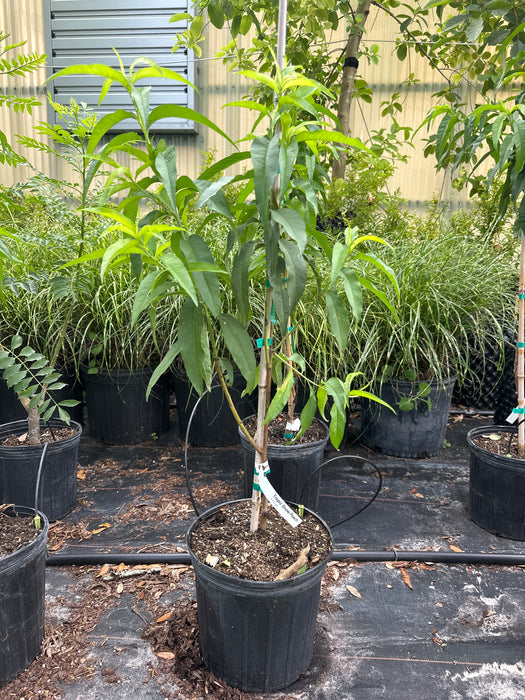
Peach-Tropic Snow
Sold out
Original price
$79.00
-
Original price
$79.00
Original price
$79.00
$79.00
-
$79.00
Current price
$79.00
Low Chill Hour Peach, perfect for Tampa climate
The Tropic Snow Peach Tree, a low-chill variety of Prunus persica, is a compact fruit tree prized for its sweet, juicy peaches and adaptability to warm climates. Developed for regions with mild winters, it produces reliable harvests in subtropical and tropical areas where traditional peach trees struggle. Below is a detailed overview of its characteristics, care requirements, and planting guidelines, tailored for gardeners seeking to grow this delicious fruit tree.Taste
The Tropic Snow Peach is celebrated for its sweet, white-fleshed fruit with low acidity, offering a juicy, dessert-like flavor. The peaches have a mild, floral sweetness, often described as honey-like, with a tender, melting texture. Unlike yellow-fleshed peaches, Tropic Snow peaches are less tart, making them ideal for eating fresh, adding to salads, or using in desserts like cobblers. The skin is typically blushed with pink or red over a creamy white background, enhancing its visual appeal and sweet taste.Best Growing Environment
The Tropic Snow Peach Tree thrives in warm, subtropical to tropical climates, requiring only 100–200 chill hours (hours below 45°F) to set fruit, making it ideal for regions with mild winters. It prefers well-draining, loamy soil with a slightly acidic to neutral pH (6.0–7.0), amended with organic matter like compost to improve fertility and drainage. A sheltered location protects its branches from strong winds, which can damage blossoms or fruit. The tree is well-suited for southern regions like central and south Texas, southern California, or central Florida, but can also be grown in large containers (15–20 gallons) for mobility in cooler climates, allowing indoor protection during rare cold snaps.Common Names
The Tropic Snow Peach Tree is known by a few names, reflecting its unique characteristics:
This dwarf peach tree typically grows to 8–12 feet in height with a spread of 8–10 feet, making it ideal for small gardens, orchards, or container growing. With pruning, it can be maintained at 5–8 feet for easier fruit harvesting and space management. Its compact size and attractive spring blossoms make it a popular ornamental choice, adding beauty to landscapes while producing abundant fruit.Growth Rate
The Tropic Snow Peach has a moderate growth rate, adding about 1–2 feet per year under optimal conditions. Grafted trees often produce fruit within 1–2 years of planting, significantly faster than seed-grown peaches, which may take 3–4 years. Growth is most vigorous in spring and summer, with proper care accelerating establishment. Regular pruning to maintain an open canopy and remove dead wood enhances growth and fruit production.Sun Requirements
The Tropic Snow Peach requires full sun, with at least 6–8 hours of direct sunlight daily, to maximize fruit production and tree health. A south-facing location ensures ample light for photosynthesis and fruit ripening. In extremely hot climates, some afternoon shade can prevent leaf or fruit scorching, especially for young trees. For container-grown trees, place them in a sunny spot or near a bright window if overwintered indoors. Insufficient light can reduce fruit yield and quality.Cold Hardiness
The Tropic Snow Peach is hardy in USDA Zones 8–10, tolerating minimum temperatures of 10–30°F. It is less cold-hardy than traditional peach varieties, as it’s bred for low-chill environments, but mature trees can withstand brief dips to 15°F. Young trees are more vulnerable, requiring protection below 20°F. In Zone 8, use frost blankets or mulch around the base during cold snaps. In colder zones (7 or below), grow in containers and move indoors when temperatures drop below 20°F to prevent branch or root damage.
 Water Requirements
The Tropic Snow Peach prefers consistently moist, well-draining soil, particularly during establishment and fruit development. Water young trees every 2–3 days for the first 6–8 weeks, ensuring the top 2–3 inches of soil remain moist. Mature trees need watering once or twice weekly, increasing during hot, dry periods or when fruit is ripening. In humid climates, natural rainfall may suffice, but supplemental watering is needed during dry spells. For potted trees, water when the top inch of soil feels dry, ensuring excess water drains to avoid root rot. Overwatering can lead to fungal issues, while underwatering may cause fruit drop.Planting Guide
To plant a Tropic Snow Peach Tree:
Fertilize the Tropic Snow Peach 3–4 times per year during the growing season (March–August in Zones 8–10) to support growth and fruiting. Use a balanced, slow-release fertilizer with a 10-10-10 or 8-8-8 NPK ratio, applying 0.5–1 pound for young trees and 2–3 pounds for mature trees, spread around the drip line and watered in. For potted trees, use half-strength to avoid root burn. Fertilize in early spring (March), late spring (May), early summer (June), and late summer (August) to align with growth and fruit development. Avoid fertilizing in fall or winter (September–February) to prevent new growth vulnerable to cold. Organic options like compost or fish emulsion can supplement chemical fertilizers, especially for young trees.
USDA Zone
The Tropic Snow Peach is best suited for USDA Zones 8–10, where minimum temperatures range from 10–30°F. It thrives in warm climates with mild winters, requiring only 100–200 chill hours, making it ideal for regions like central and south Texas, southern California, and central Florida. In Zone 8, provide winter protection during rare cold snaps. In colder zones (7 or below), grow in containers and move indoors when temperatures drop below 20°F to ensure survival.,
Additional Notes
The Tropic Snow Peach is celebrated for its sweet, white-fleshed fruit with low acidity, offering a juicy, dessert-like flavor. The peaches have a mild, floral sweetness, often described as honey-like, with a tender, melting texture. Unlike yellow-fleshed peaches, Tropic Snow peaches are less tart, making them ideal for eating fresh, adding to salads, or using in desserts like cobblers. The skin is typically blushed with pink or red over a creamy white background, enhancing its visual appeal and sweet taste.Best Growing Environment
The Tropic Snow Peach Tree thrives in warm, subtropical to tropical climates, requiring only 100–200 chill hours (hours below 45°F) to set fruit, making it ideal for regions with mild winters. It prefers well-draining, loamy soil with a slightly acidic to neutral pH (6.0–7.0), amended with organic matter like compost to improve fertility and drainage. A sheltered location protects its branches from strong winds, which can damage blossoms or fruit. The tree is well-suited for southern regions like central and south Texas, southern California, or central Florida, but can also be grown in large containers (15–20 gallons) for mobility in cooler climates, allowing indoor protection during rare cold snaps.Common Names
The Tropic Snow Peach Tree is known by a few names, reflecting its unique characteristics:
- Tropic Snow Peach
- Low-Chill Peach
- Prunus persica ‘Tropic Snow’ (botanical name)
- Snow Peach
This dwarf peach tree typically grows to 8–12 feet in height with a spread of 8–10 feet, making it ideal for small gardens, orchards, or container growing. With pruning, it can be maintained at 5–8 feet for easier fruit harvesting and space management. Its compact size and attractive spring blossoms make it a popular ornamental choice, adding beauty to landscapes while producing abundant fruit.Growth Rate
The Tropic Snow Peach has a moderate growth rate, adding about 1–2 feet per year under optimal conditions. Grafted trees often produce fruit within 1–2 years of planting, significantly faster than seed-grown peaches, which may take 3–4 years. Growth is most vigorous in spring and summer, with proper care accelerating establishment. Regular pruning to maintain an open canopy and remove dead wood enhances growth and fruit production.Sun Requirements
The Tropic Snow Peach requires full sun, with at least 6–8 hours of direct sunlight daily, to maximize fruit production and tree health. A south-facing location ensures ample light for photosynthesis and fruit ripening. In extremely hot climates, some afternoon shade can prevent leaf or fruit scorching, especially for young trees. For container-grown trees, place them in a sunny spot or near a bright window if overwintered indoors. Insufficient light can reduce fruit yield and quality.Cold Hardiness
The Tropic Snow Peach is hardy in USDA Zones 8–10, tolerating minimum temperatures of 10–30°F. It is less cold-hardy than traditional peach varieties, as it’s bred for low-chill environments, but mature trees can withstand brief dips to 15°F. Young trees are more vulnerable, requiring protection below 20°F. In Zone 8, use frost blankets or mulch around the base during cold snaps. In colder zones (7 or below), grow in containers and move indoors when temperatures drop below 20°F to prevent branch or root damage.
The Tropic Snow Peach prefers consistently moist, well-draining soil, particularly during establishment and fruit development. Water young trees every 2–3 days for the first 6–8 weeks, ensuring the top 2–3 inches of soil remain moist. Mature trees need watering once or twice weekly, increasing during hot, dry periods or when fruit is ripening. In humid climates, natural rainfall may suffice, but supplemental watering is needed during dry spells. For potted trees, water when the top inch of soil feels dry, ensuring excess water drains to avoid root rot. Overwatering can lead to fungal issues, while underwatering may cause fruit drop.Planting Guide
To plant a Tropic Snow Peach Tree:
- Location: Choose a sunny, wind-protected site with well-draining soil, at least 10–15 feet from other trees or structures. For containers, use a 15–20-gallon pot with drainage holes.
- Soil Preparation: Dig a hole 2–3 times the width of the root ball and as deep, mixing 50% native soil with 50% compost or aged manure for fertility and drainage.
- Planting: Remove the tree from its pot, loosen the roots, and place it in the hole at the same depth as it was grown. Backfill, tamp gently, and water thoroughly.
- Mulching: Apply 2–3 inches of organic mulch (e.g., wood chips or bark) in a 3–4-foot radius, keeping it 4–6 inches from the trunk to prevent rot.
- Spacing: Space trees 10–15 feet apart to allow for canopy and root spread.
- Container Planting: Use a well-draining, loamy potting mix and repot every 2–3 years to refresh soil and manage root growth.
Fertilize the Tropic Snow Peach 3–4 times per year during the growing season (March–August in Zones 8–10) to support growth and fruiting. Use a balanced, slow-release fertilizer with a 10-10-10 or 8-8-8 NPK ratio, applying 0.5–1 pound for young trees and 2–3 pounds for mature trees, spread around the drip line and watered in. For potted trees, use half-strength to avoid root burn. Fertilize in early spring (March), late spring (May), early summer (June), and late summer (August) to align with growth and fruit development. Avoid fertilizing in fall or winter (September–February) to prevent new growth vulnerable to cold. Organic options like compost or fish emulsion can supplement chemical fertilizers, especially for young trees.
The Tropic Snow Peach is best suited for USDA Zones 8–10, where minimum temperatures range from 10–30°F. It thrives in warm climates with mild winters, requiring only 100–200 chill hours, making it ideal for regions like central and south Texas, southern California, and central Florida. In Zone 8, provide winter protection during rare cold snaps. In colder zones (7 or below), grow in containers and move indoors when temperatures drop below 20°F to ensure survival.,
- Pruning: Prune in late winter (February–March) before bud break to maintain an open, vase-shaped canopy, removing dead, damaged, or crossing branches. This improves air circulation and fruit production. Thin fruit in early summer to ensure larger, healthier peaches.
- Pests and Diseases: Monitor for pests like peach tree borers, aphids, or scale, and treat with neem oil or insecticidal soap. Prevent fungal diseases like peach leaf curl with copper-based fungicides applied in late fall or early spring.
- Fruiting: The tree often produces fruit in its first or second year, with harvests typically in late spring to early summer (May–June). Pick peaches when they soften slightly and have a sweet aroma.
The Tropic Snow Peach Tree’s compact size, early fruiting, and sweet, low-acid peaches make it an excellent choice for warm-climate gardeners or those using containers in slightly cooler regions.