
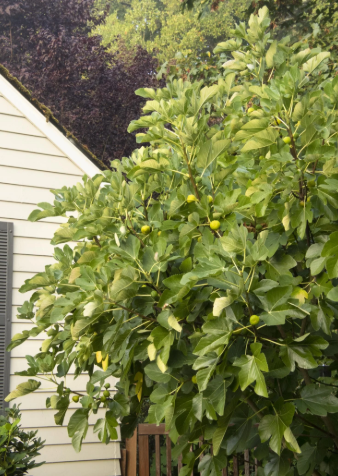


Fig Kadota Fig
Original price
$59.00
-
Original price
$59.00
Original price
$59.00
$59.00
-
$59.00
Current price
$59.00
The Kadota Fig tree (Ficus carica ‘Kadota’) is a popular cultivar prized for its sweet, versatile fruit and adaptability to various growing conditions. Known for its rich flavor and manageable growth, it’s a favorite among home gardeners and commercial growers alike. Below is a detailed overview of its characteristics, care requirements, and cultivation guidelines.Taste
Kadota figs are renowned for their sweet, honey-like flavor with a mild, slightly nutty undertone. The flesh is juicy and amber to pale pink, with a soft, creamy texture when fully ripe. Unlike some fig varieties, Kadota figs have a less intense sweetness, making them ideal for fresh eating, drying, or processing into jams and preserves. Their thin, edible skin ranges from greenish-yellow to light yellow, adding to their appeal for culinary uses.Best Growing Environment
Kadota figs thrive in warm, Mediterranean-like climates with long, hot summers and mild winters. They perform best in well-drained, loamy soils with a pH between 6.0 and 6.5, though they can tolerate a range of soil types, including sandy or clay-heavy soils, if drainage is adequate. These trees prefer open, sunny locations with good air circulation to prevent fungal issues. While they can adapt to coastal or inland regions, protection from strong winds and extreme cold is essential for optimal growth and fruit production.Common Names
The Kadota Fig is known by several names, reflecting its widespread cultivation and historical significance. Common names include:
Kadota Fig trees typically reach an average height of 10 to 20 feet when mature, depending on pruning and growing conditions. In ideal environments, they can grow slightly taller, up to 25 feet, but regular pruning keeps them manageable for home gardens or container growth. When grown in pots, they may stay smaller, around 6 to 10 feet.Growth Rate
The Kadota Fig has a moderate growth rate, typically adding 1 to 2 feet per year under optimal conditions. Growth is fastest in warm climates with consistent care, including adequate water, sunlight, and nutrients. Young trees establish quickly, often producing fruit within 2 to 3 years of planting.Sun Requirements
Kadota Figs require full sun to produce the best fruit yields and maintain healthy growth. They need at least 6 to 8 hours of direct sunlight daily. Partial shade may reduce fruit production and slow growth, so planting in an open, south-facing location is ideal.Cold Hardiness
Kadota Figs are moderately cold-hardy, tolerating temperatures as low as 10°F to 15°F (-12°C to -9°C) when fully dormant. However, prolonged freezing or sudden temperature drops can damage young trees or branches. In colder regions, winter protection—such as wrapping the tree or mulching the base—is recommended to prevent frost damage.Water Requirements
Kadota Figs have moderate water needs, requiring regular irrigation during the growing season, especially in hot, dry climates. Young trees need consistent moisture to establish roots, typically 1 to 2 inches of water per week. Mature trees are more drought-tolerant but benefit from deep, infrequent watering to encourage deep root growth. Overwatering or poor drainage can lead to root rot, so ensure soil dries slightly between waterings.Planting Guide
To plant a Kadota Fig tree:
Fertilize Kadota Figs to promote healthy growth and fruit production:
Zones 8 to 10 provide ideal conditions for consistent fruiting.
Kadota figs are renowned for their sweet, honey-like flavor with a mild, slightly nutty undertone. The flesh is juicy and amber to pale pink, with a soft, creamy texture when fully ripe. Unlike some fig varieties, Kadota figs have a less intense sweetness, making them ideal for fresh eating, drying, or processing into jams and preserves. Their thin, edible skin ranges from greenish-yellow to light yellow, adding to their appeal for culinary uses.Best Growing Environment
Kadota figs thrive in warm, Mediterranean-like climates with long, hot summers and mild winters. They perform best in well-drained, loamy soils with a pH between 6.0 and 6.5, though they can tolerate a range of soil types, including sandy or clay-heavy soils, if drainage is adequate. These trees prefer open, sunny locations with good air circulation to prevent fungal issues. While they can adapt to coastal or inland regions, protection from strong winds and extreme cold is essential for optimal growth and fruit production.Common Names
The Kadota Fig is known by several names, reflecting its widespread cultivation and historical significance. Common names include:
- White Kadota
- Dottato (in Italy)
- Honey Fig
- Lemon Fig (due to its yellowish skin)
Kadota Fig trees typically reach an average height of 10 to 20 feet when mature, depending on pruning and growing conditions. In ideal environments, they can grow slightly taller, up to 25 feet, but regular pruning keeps them manageable for home gardens or container growth. When grown in pots, they may stay smaller, around 6 to 10 feet.Growth Rate
The Kadota Fig has a moderate growth rate, typically adding 1 to 2 feet per year under optimal conditions. Growth is fastest in warm climates with consistent care, including adequate water, sunlight, and nutrients. Young trees establish quickly, often producing fruit within 2 to 3 years of planting.Sun Requirements
Kadota Figs require full sun to produce the best fruit yields and maintain healthy growth. They need at least 6 to 8 hours of direct sunlight daily. Partial shade may reduce fruit production and slow growth, so planting in an open, south-facing location is ideal.Cold Hardiness
Kadota Figs are moderately cold-hardy, tolerating temperatures as low as 10°F to 15°F (-12°C to -9°C) when fully dormant. However, prolonged freezing or sudden temperature drops can damage young trees or branches. In colder regions, winter protection—such as wrapping the tree or mulching the base—is recommended to prevent frost damage.Water Requirements
Kadota Figs have moderate water needs, requiring regular irrigation during the growing season, especially in hot, dry climates. Young trees need consistent moisture to establish roots, typically 1 to 2 inches of water per week. Mature trees are more drought-tolerant but benefit from deep, infrequent watering to encourage deep root growth. Overwatering or poor drainage can lead to root rot, so ensure soil dries slightly between waterings.Planting Guide
To plant a Kadota Fig tree:
- Choose a sunny, well-drained site with loamy soil.
- Dig a hole twice as wide and as deep as the root ball.
- Mix compost or aged manure into the soil to improve fertility.
- Place the tree in the hole, ensuring the root collar is level with the soil surface.
- Backfill with soil, tamp gently, and water thoroughly.
- Space trees 10 to 20 feet apart to allow for mature growth.
- For container planting, use a large pot (at least 15 gallons) with drainage holes and a well-draining potting mix.
Fertilize Kadota Figs to promote healthy growth and fruit production:
- Early Spring (March/April): Apply a balanced fertilizer (e.g., 10-10-10 or 8-8-8 NPK) as new growth begins to support leaf and branch development. Use about 1 pound of fertilizer per year of tree age, up to 5 pounds for mature trees.
- Early Summer (June): Apply a nitrogen-heavy fertilizer (e.g., 21-0-0) to boost fruit development. Use half the spring amount to avoid over-fertilization.
- Late Summer (August): Optionally, apply a light dose of potassium-rich fertilizer (e.g., 0-0-50) to enhance fruit quality and prepare the tree for dormancy.
Spread fertilizer evenly around the drip line, water thoroughly, and avoid direct contact with the trunk to prevent burn.
Zones 8 to 10 provide ideal conditions for consistent fruiting.