


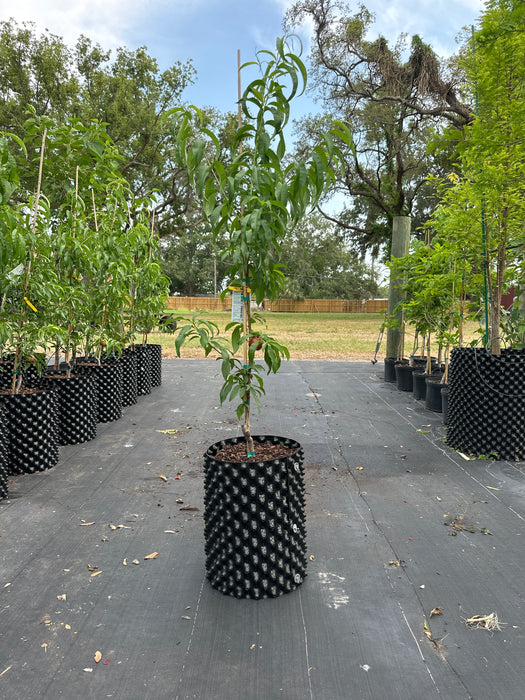


Nectarine-Sunmist
Original price
$69.00
-
Original price
$139.00
Original price
$139.00
$69.00
-
$139.00
Current price
$139.00
Sunmist Nectarine Tree Overview
-
Taste
- Produces fruit with a rich, honey-like sweetness balanced by a subtle tangy note.
- Features smooth, firm, juicy yellow flesh, perfect for fresh eating, baking, or fruit salads.
- As a freestone nectarine, the pit separates easily, enhancing its versatility in culinary uses.
- Offers a vibrant red-blushed skin and aromatic profile for a delightful sensory experience.
-
Best Growing Environment
- Thrives in warm, temperate climates with well-drained, fertile soil, preferably sandy loam.
- Requires a soil pH of 6.0 to 7.0 and a location sheltered from strong winds to protect blossoms.
- Benefits from good air circulation to minimize disease risks like peach leaf curl or brown rot.
- Needs hot summers (above 85°F) and a clear winter dormancy period for optimal growth.
-
Botanical Name
- Scientifically classified as Prunus persica var. nucipersica 'Sunmist'.
- Belongs to the Rosaceae family, closely related to peaches but distinguished by its smooth skin.
- The cultivar name "Sunmist" denotes this specific variety’s unique traits.
-
Common Names
- Most commonly known as "Sunmist Nectarine" or simply "Sunmist" among growers.
- Falls under the general category of nectarines, sometimes called "smooth peaches."
- The name "Sunmist" highlights its bright, sunny fruit and flavorful appeal.
-
Average Height
- Typically grows to 12 to 15 feet tall at maturity with regular pruning.
- Can reach up to 20 feet on standard rootstocks if unpruned, though smaller sizes aid harvesting.
- Height depends on pruning practices and environmental conditions.
-
Growth Rate
- Displays a moderate to fast growth rate, adding 12 to 24 inches annually.
- Grows most vigorously in its early years while establishing its structure.
- Growth slows as the tree matures and shifts focus to fruit production.
-
Sun Requirements
- Requires full sun, needing 6 to 8 hours of direct sunlight daily during the growing season.
- Adequate sunlight is crucial for flower bud development, fruit set, and flavor enhancement.
- Lack of sun can lead to leggy growth, smaller fruit, and lower yields.
-
Cold Hardiness
- Hardy in USDA Zones 5 to 9, withstanding lows of -10°F to -20°F in Zone 5.
- Needs 500 to 600 chill hours (below 45°F) during dormancy to break dormancy effectively.
- May require winter protection in colder zones to shield from frost or extreme cold.
-
Water Requirements
- Demands moderate, consistent watering, especially during establishment and fruit growth.
- New trees need 1 inch weekly for six weeks; mature trees require 1 to 2 inches every 10 to 14 days.
- Avoid overwatering to prevent root rot, using drip irrigation for efficient moisture delivery.
-
Planting Guide
- Best planted in late winter to early spring (February to April) for root establishment.
- Select a sunny, well-drained site; dig a hole twice as wide and as deep as the root ball.
- Position the graft union 2 to 6 inches above soil level and space trees 12 to 15 feet apart.
- Backfill with compost-amended soil, tamp down, and water thoroughly after planting.
-
Fertilizing Times and Recommended Fertilizer
- Apply a balanced 10-10-10 (nitrogen-phosphorus-potassium) fertilizer at key intervals.
- New trees: ½ pound 7-10 days post-planting, then ½ pound 40 days later, 8-12 inches from trunk.
- Years 2-3: ¾ pound in early spring (March) and late spring (May).
- Mature trees: 1-2 pounds in early spring (March), optional 1 pound in late spring (May); avoid late-season applications.
-
USDA Zone
- Suited to USDA Hardiness Zones 5 through 9, adaptable across many U.S. regions.
- Yields up to 50 pounds of fruit per mature tree in suitable zones with proper care.
- Combines ornamental beauty and productive harvests for home orchards.