


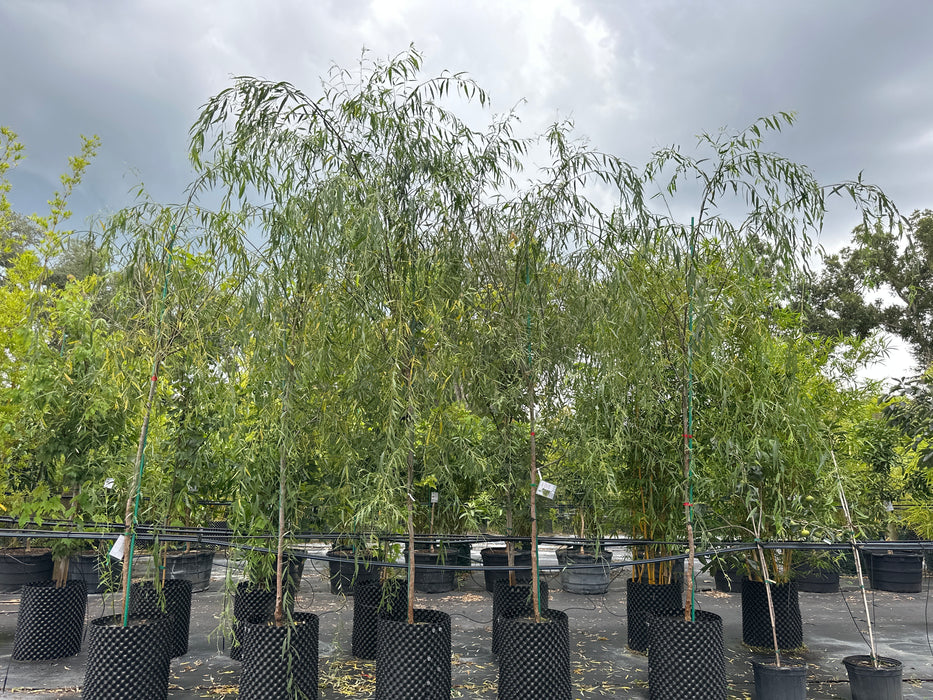

Weeping Willow Tree
Original price
$49.00
-
Original price
$215.00
Original price
$149.00
$49.00
-
$215.00
Current price
$149.00
Weeping Willow Tree Overview
-
Best Growing Environment
-
The Weeping Willow thrives in wet, temperate environments, often near rivers, lakes, or low-lying areas where soil stays consistently moist.
-
It prefers rich, well-drained loamy or silty soils with a pH of 6.0 to 7.5, though it tolerates clay and poor drainage better than most trees.
-
A location with ample space and minimal competition from other plants suits its expansive root system and drooping canopy.
-
-
Botanical Name
-
The botanical name is Salix babylonica.
-
It belongs to the Salicaceae family, which includes other willows, poplars, and aspens.
-
-
Common Names
-
Commonly known as Weeping Willow.
-
Also called Babylon Willow, Mourning Willow, or simply Willow due to its graceful, pendulous branches.
-
In some regions, it may be confused with hybrid cultivars like Salix × sepulcralis (e.g., Golden Weeping Willow), though these are distinct.
-
-
Average Height and Diameter
-
Typically grows to an average height of 30 to 50 feet, though it can reach 70 feet in ideal conditions with age.
-
The canopy diameter often spans 35 to 50 feet, creating a wide, cascading silhouette that dominates landscapes.
-
Pruning or site constraints can keep it smaller, around 20 to 30 feet tall and wide, for ornamental purposes.
-
-
Growth Rate
-
Exhibits a fast growth rate, adding 2 to 3 feet or more per year, especially in youth or with abundant water and nutrients.
-
Can reach mature height within 15 to 20 years, though growth slows as the tree ages or in less favorable conditions.
-
Its rapid growth makes it a popular choice for quick shade or screening.
-
-
Sun Requirements
-
Prefers full sun, requiring at least 6 hours of direct sunlight daily for optimal growth and foliage density.
-
Tolerates partial shade (4-6 hours of sun), but reduced light may lead to sparser branches and slower growth.
-
Plant in an open area to maximize sunlight and allow its canopy to spread naturally.
-
-
Cold Hardiness
-
Hardy in USDA zones 6 to 9, withstanding temperatures down to -10F to 0F (-23°C to -18°C) once established.
-
Young trees or tender growth are more susceptible to frost damage; protect them in zones 5 or below during harsh winters.
-
In warmer zones (9+), it thrives but may struggle with extreme heat and drought without sufficient water.
-
-
Water Requirements
-
Requires high water levels, needing 1.5 to 2 inches per week or more, thriving in consistently moist to wet soils.
-
Drought-tolerant once mature, but prolonged dry spells can cause leaf drop or stunted growth; supplemental watering is critical in arid climates.
-
Its aggressive roots seek out water sources, so avoid planting near pipes or foundations.
-
-
Detailed Fertilizing Guide
-
Fertilize twice a year: in early spring (March to April) as growth begins, and late spring (May to June) to support rapid development.
-
Use a balanced 10-10-10 fertilizer or a slow-release tree formula (e.g., 12-6-6), applying 1 pound per inch of trunk diameter, spread under the canopy and watered in deeply.
-
Avoid over-fertilizing, which can weaken branches; skip fall applications to prevent late growth vulnerable to frost damage.
-
-
Planting Guide
-
Plant in early spring (March to April) or fall (September to October) to establish roots during cooler, wetter months.
-
Dig a hole twice as wide and as deep as the root ball, position the tree with the root flare at soil level, and backfill with native soil mixed with compost; water thoroughly after planting.
-
Space trees 40 to 50 feet apart to accommodate their wide canopy and invasive roots, keeping them away from structures or utilities.
-
-
USDA Zone
-
Best suited for USDA zones 6 to 9, excelling in regions like the eastern U.S. and parts of the Midwest with moist soils.
-
Zones 9-10 need ample irrigation, though it may not reach its full potential in very hot, dry climates.
-